🎨 This image is an AI-generated illustration, not a photograph of a specific stall or dish.
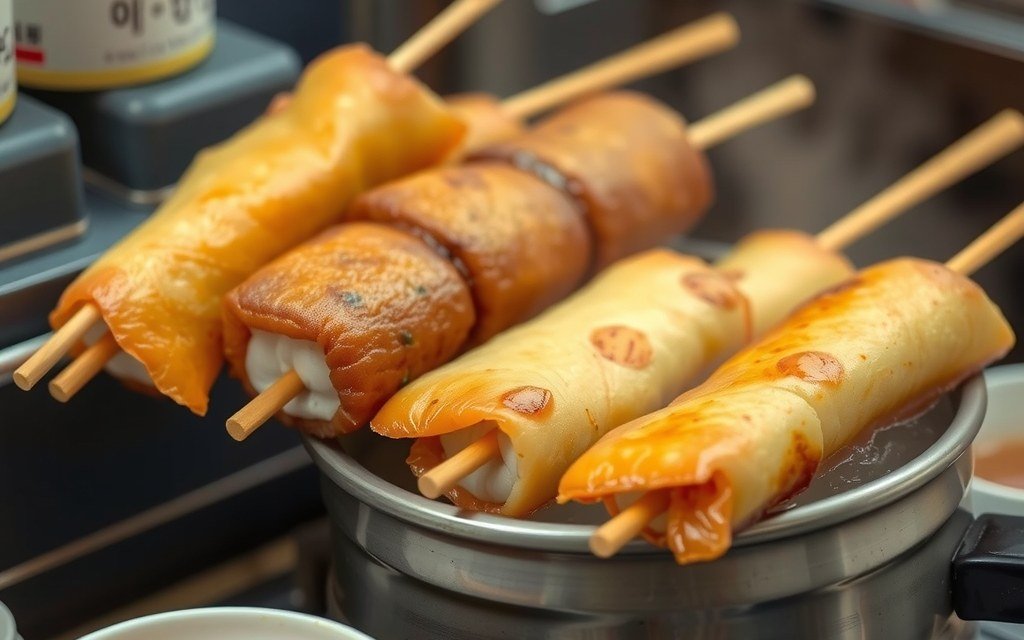
Eomuk (어묵), often called odeng, is the fish cake on a skewer that warms up Korean winters — usually served with a free cup of hot broth. First the facts, then the story.
🍢 The basics
- What it is: sheets of fish cake folded onto skewers and simmered in a warm anchovy-and-kelp broth.
- Main ingredients: fish paste (usually pollock) with starch; broth of anchovy, kelp and radish.
- Taste: savoury and umami, mild and warming; the broth is the other half of the experience.
- Where & when: winter street carts; typically about a thousand won a skewer, broth free.
- ⚠️ Allergens: fish, wheat and soy.
The story: the free cup of broth
On a cold evening, nothing beats pulling a skewer from the steaming pot and sipping the hot anchovy broth from a paper cup — refills usually free. It is the definition of cheap, warming comfort.
You will hear it called both “odeng” (from Japanese) and “eomuk,” the Korean word; the dish itself is pure Korean winter.
Where it ranks: No. 5 in our 10 Best Korean Street Foods guide. Hungry for more? Try Tteokbokki and Twigim too.
Frequently Asked Questions
They refer to the same fish cake. “Odeng” comes from Japanese, while “eomuk” is the Korean word; both are used on the street.
Usually yes — stalls hand you a paper cup of the hot anchovy-kelp broth to sip while you eat, often with free refills.
Mostly in cold weather, when the warm skewers and broth are especially comforting.
It contains fish and typically wheat and soy, so it is not suitable for those with a fish or gluten allergy.