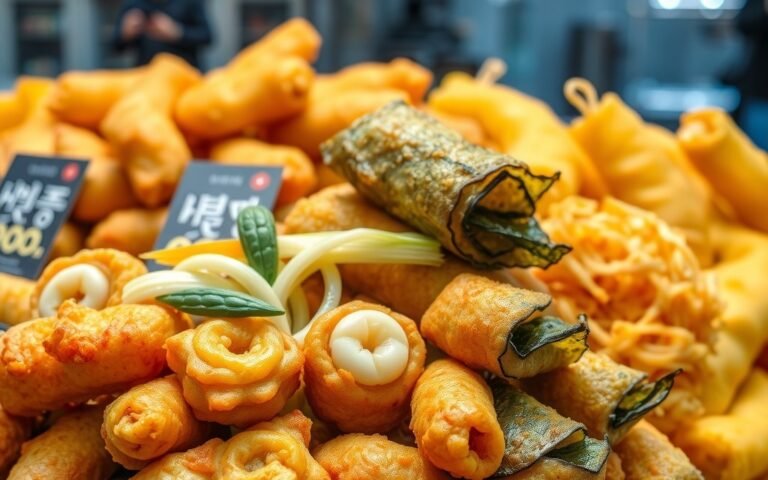
🎨 This image is an AI-generated illustration, not a photograph of a specific stall or dish.
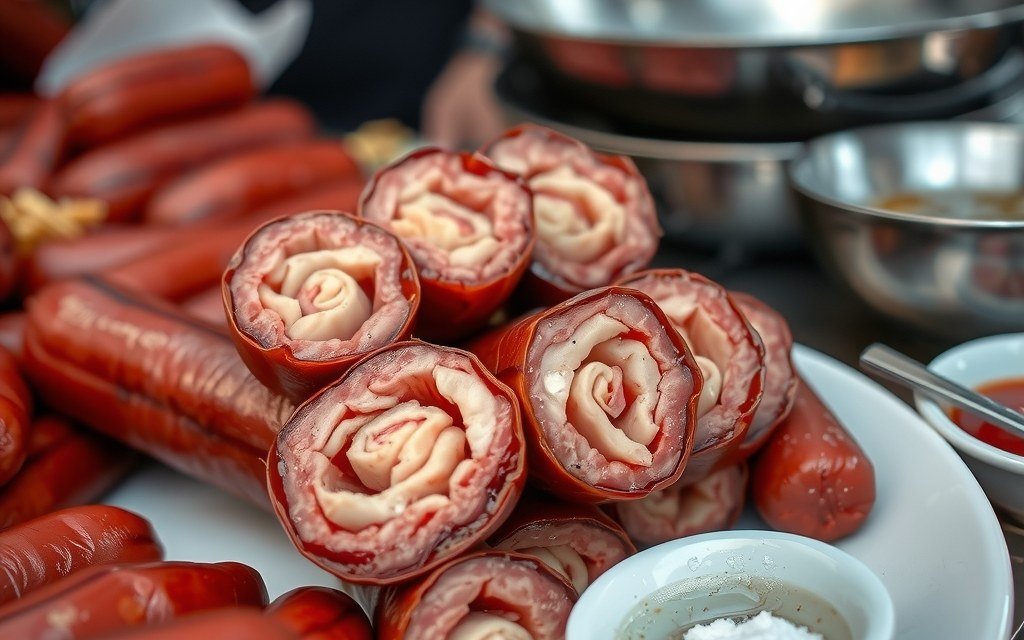
Sundae (순대) is Korea’s hearty blood sausage — a humble, filling market classic. First the facts, then the story.
🍢 The basics
- What it is: casing stuffed with sweet-potato glass noodles, barley or rice and pig’s blood, steamed and sliced.
- Main ingredients: glass noodles (dangmyeon), pig’s blood, barley or rice, in a sausage casing.
- Taste: savoury and mild with a soft, chewy bite — less intense than it sounds.
- Where & when: markets and bunsik shops year-round, often sold next to tteokbokki.
- ⚠️ Allergens: contains pork and blood; usually soy.
The story: humble market comfort
Sundae is proper old-school market food — cheap, filling and usually served with slices of liver and lung on the side. It is milder than its blood-sausage cousins abroad, carried by the chewy glass-noodle filling.
Koreans eat it dipped in seasoned salt, and many like to dunk it straight into the spicy tteokbokki sauce it is so often sold beside. Regional styles like Baekam and Abai sundae each have their fans.
Where it ranks: No. 6 in our 10 Best Korean Street Foods guide. Hungry for more? Try Tteokbokki and Twigim too.
Frequently Asked Questions
A casing stuffed mainly with sweet-potato glass noodles and pig’s blood, plus barley or rice, then steamed and sliced.
Savoury and fairly mild, with a soft, chewy texture — gentler than many Western blood sausages.
Dipped in seasoned salt, or — a favourite move — dunked into the spicy sauce of the tteokbokki it is usually sold with.
It is a cousin of dishes like black pudding, but milder and noodle-filled rather than oat- or grain-heavy.