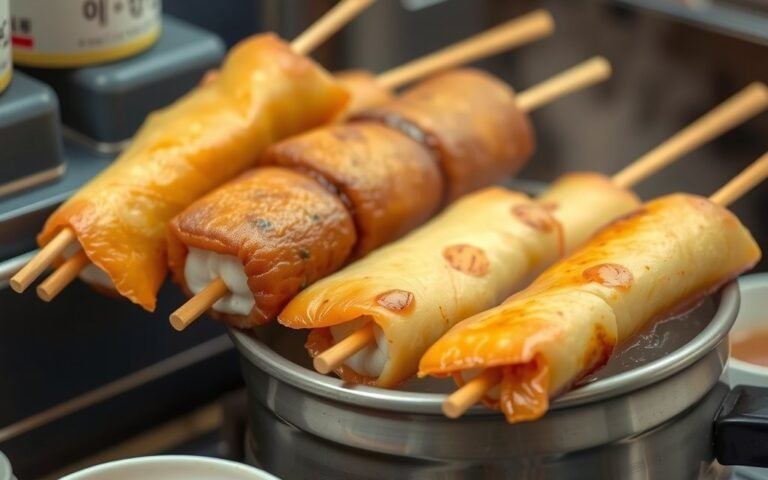
🎨 This image is an AI-generated illustration, not a photograph of a specific stall or dish.
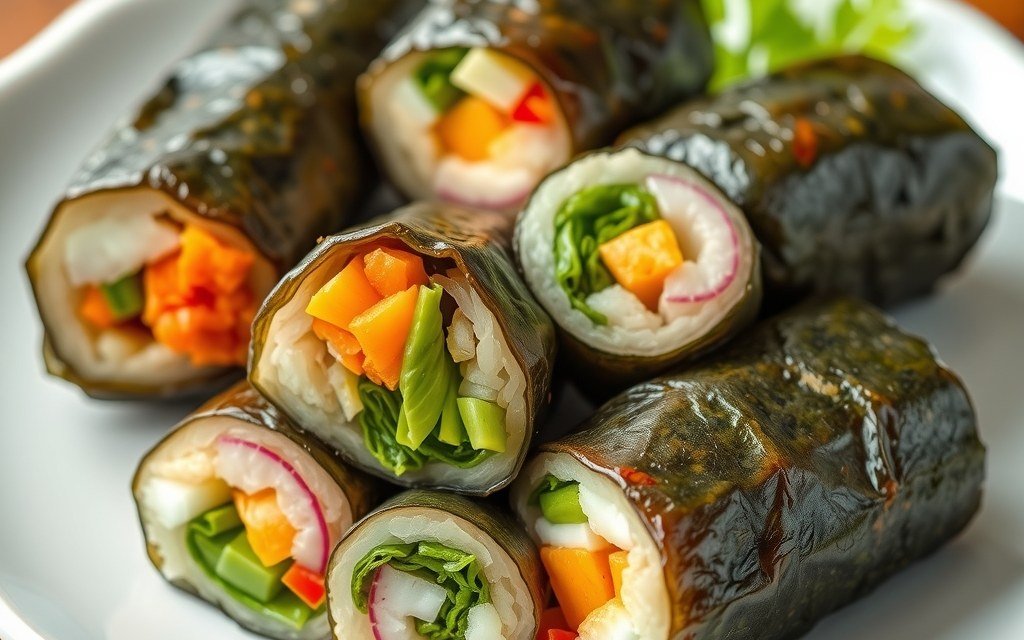
Gimbap (김밥) is Korea’s go-to portable meal — rice and fillings rolled in seaweed and sliced into neat rounds. First the facts, then the story.
🍢 The basics
- What it is: seasoned rice and fillings rolled in dried seaweed (gim) and cut into bite-size rounds.
- Main ingredients: rice, gim (seaweed), pickled radish, carrot, spinach, egg, and ham, tuna or imitation crab.
- Taste: savoury, fresh and lightly sesame-scented — satisfying but not heavy.
- Where & when: bunsik shops, markets and convenience stores all day; cheap and endlessly customisable.
- ⚠️ Allergens: egg, soy, sesame, fish (tuna) and wheat (imitation crab).
The story: the meal that travels
Gimbap is what Koreans pack for picnics, school trips and road trips — portable, tidy and made to share. Every shop and household has its own fillings, from classic vegetable to tuna-mayo, cheese or spicy pork.
It looks like sushi but is its own thing: the rice is seasoned with sesame oil and salt rather than vinegar, and the fillings are usually cooked.
Where it ranks: No. 4 in our 10 Best Korean Street Foods guide. Hungry for more? Try Tteokbokki and Eomuk too.
Frequently Asked Questions
No. Gimbap rice is seasoned with sesame oil and salt (not vinegar), and the fillings are usually cooked — it is a Korean dish in its own right.
Commonly pickled radish, carrot, spinach, egg and a protein like ham, tuna, or imitation crab — plus many modern variations.
Yes — vegetable gimbap is common. Just check that no fish, ham or imitation crab is included.
At bunsik snack shops, markets and convenience stores across Korea; it is one of the cheapest, most convenient meals around.