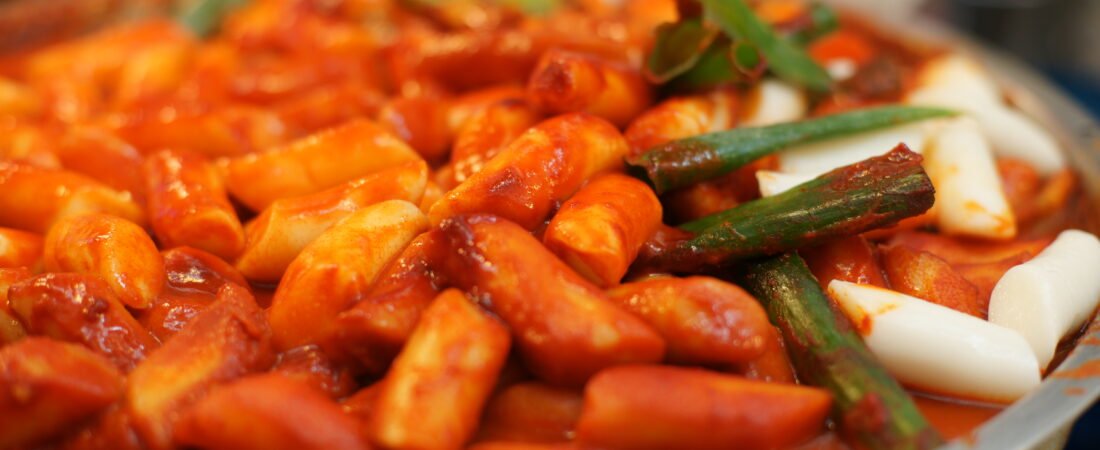
There’s a sound that defines Korean street food culture more than any other — the deep, rolling bubble of thick red sauce simmering in a wide, flat pan. You hear it before you see it, and you smell it before you hear it. Sweet, spicy, and utterly magnetic. That’s Tteokbokki(떡볶이), and once it pulls you in, there’s no going back.
In every Korean market, every school neighborhood, every late-night snack street, tteokbokki is there — simmering, waiting, ready to set your mouth on fire in the best possible way.
Ingredients & Calories
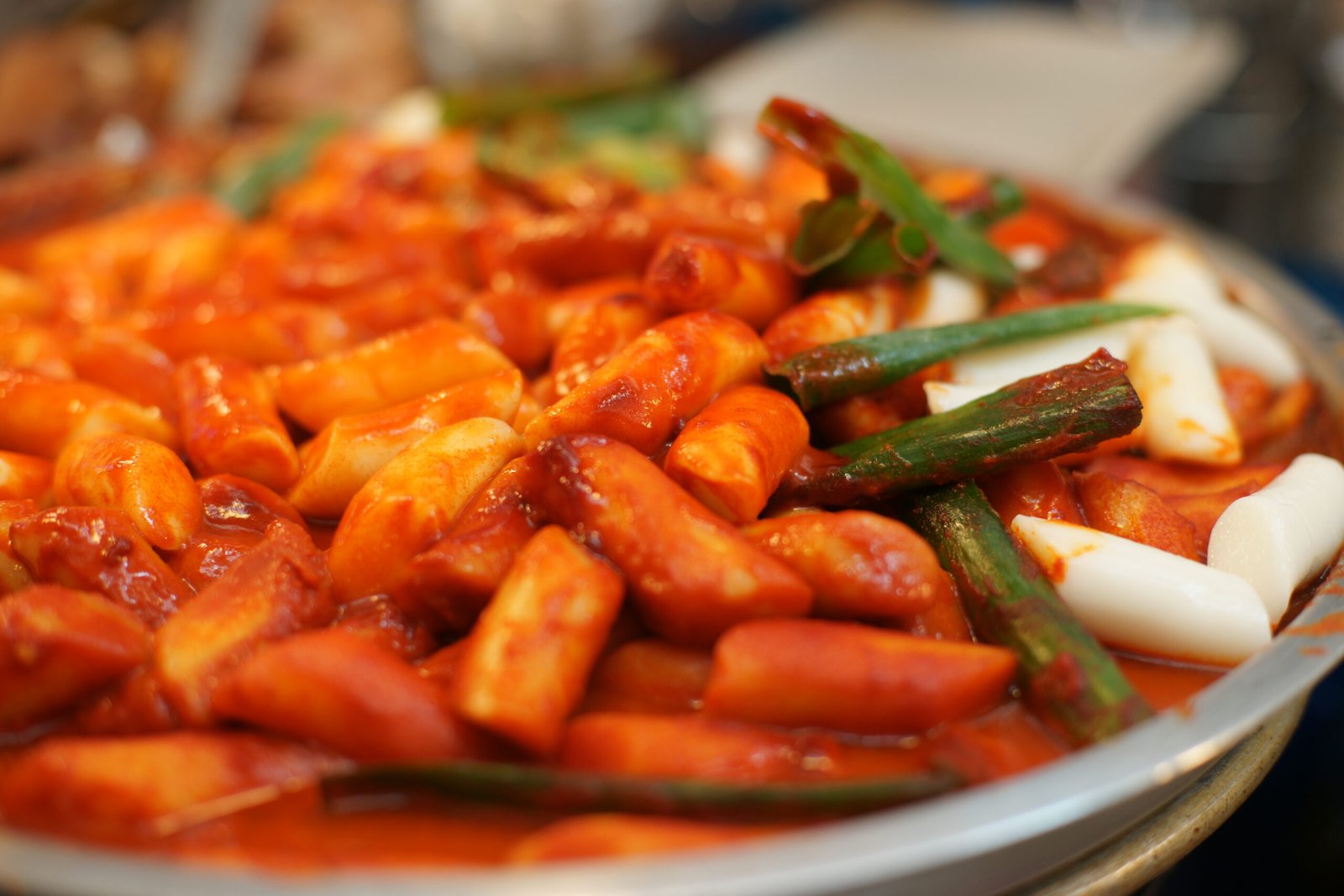
Tteokbokki starts with garae-tteok — chewy, cylindrical rice cakes that are the soul of the dish. These plump white tubes get smothered in a sauce built from gochujang (fermented red chili paste), gochugaru (chili flakes), soy sauce, and sugar. Fish cakes, boiled eggs, and scallions round out the classic version.
Each serving packs about 300–450 kcal, depending on the toppings. But here’s the thing about tteokbokki — you never eat just one serving. The combination of chewy, spicy, and sweet is scientifically designed (by generations of Korean grandmothers) to be completely addictive.
Origin & History
Here’s a surprise: tteokbokki wasn’t always spicy. During the Joseon Dynasty (1392–1897), it was a refined court dish — stir-fried rice cakes with soy sauce, sesame oil, beef, and vegetables. Elegant, mild, and fit for royalty.
The fiery red version we know today was born by happy accident in the 1950s. A street vendor in Seoul’s Sindang-dong neighborhood supposedly dropped rice cakes into a pot of gochujang sauce — and Korean food history changed forever. The spicy version spread like wildfire through street markets, and within a decade, it had become the nation’s favorite snack.
Today, Sindang-dong is still known as “Tteokbokki Town” — an entire alley dedicated to this iconic dish.
Types & Variations
What started as a simple street snack has evolved into an entire universe of flavors:
- Classic Spicy Tteokbokki — The iconic original. Gochujang-based sauce, chewy rice cakes, fish cakes, and boiled eggs. This is what started it all.
- Gungjung Tteokbokki (궁중떡볶이) — The royal court original. Soy sauce-based, mild and savory, with beef and vegetables. A taste of what royalty ate centuries ago.
- Rose Tteokbokki (로제떡볶이) — The modern sensation. A creamy pink sauce that blends gochujang with heavy cream. Rich, slightly sweet, and wildly popular with younger Koreans.
- Cheese Tteokbokki — Topped with a generous layer of melted mozzarella. The cheese tempers the heat and adds a gooey, stretchy dimension.
- Rabokki (라볶이) — Tteokbokki meets instant ramen noodles. The noodles soak up the sauce and add a different chewy texture alongside the rice cakes. A student-budget masterpiece.
- Gungmul Tteokbokki (국물떡볶이) — The soupy version. More broth, less thick sauce. Perfect when you want the flavor without the intensity.
Where to Find Tteokbokki
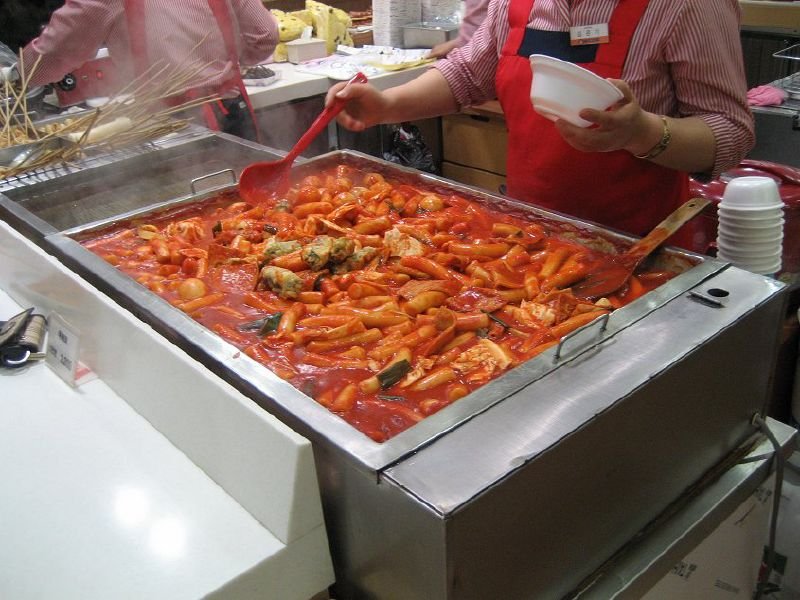
Unlike some foods you have to hunt for, tteokbokki finds you. It’s everywhere — traditional markets, school-gate snack shops (bunsikjip), late-night pojangmacha tents, and even convenience stores.
For the full experience, head to:
- Sindang-dong Tteokbokki Town, Seoul — The birthplace. Multiple restaurants serving their own variations, some simmering on tabletop burners so you control the heat.
- Gwangjang Market, Seoul — Classic market-style tteokbokki served from giant pans alongside other street food legends.
- Any neighborhood bunsikjip — These humble snack shops serve tteokbokki alongside sundae (blood sausage), twigim (fried foods), and kimbap. The true taste of everyday Korea.
A plate of tteokbokki costs around 3,000–5,000 KRW ($2–4 USD) at street stalls. An entire meal’s worth of happiness for the price of a coffee.
Who Loves Tteokbokki? Everyone.
For students, tteokbokki is the ultimate after-school ritual — crowding into a tiny bunsikjip with friends, pooling coins to order a steaming plate, and daring each other to eat the spiciest piece. For office workers, it’s a quick comfort meal that transports them back to those simpler days.
For tourists, it’s the gateway drug to Korean street food — the first fiery bite that opens the door to a whole new world of flavors. For Korean parents, it’s the dish their kids beg for on market days, and secretly, the one they crave too.
Tteokbokki is Korea’s great equalizer. Rich or modest, young or old, everyone lines up at the same stall.
Tteokbokki vs. the World’s Spicy Street Foods
How does tteokbokki compare to other famous spicy street foods?
Thai pad thai balances sweet, sour, and just a whisper of heat. Tteokbokki doesn’t whisper — it shouts. The sweetness and spiciness hit you simultaneously, bold and unapologetic.
Mexican street tacos layer their heat under fresh cilantro, lime, and salsa. Tteokbokki lets the gochujang take center stage, with the chewy rice cakes soaking up every drop of that thick, glossy sauce.
What makes tteokbokki unique isn’t just the heat — it’s the chew. That bouncy, stretchy texture of the rice cakes creates a completely different eating experience from anything in Western or Southeast Asian cuisine.
The Fire That Warms Your Soul
There’s something magical about standing at a street stall, picking up a piece of tteokbokki with a toothpick, blowing on it gently, and taking that first bite. The spice hits first — a warm wave that spreads across your tongue. Then the sweetness follows, rounding out the heat. And the rice cake itself, chewy and satisfying, stretches just right between your teeth.
Your lips tingle. Your eyes might water a little. But you’re already reaching for another piece, because tteokbokki has this way of making the heat feel like comfort rather than pain.
This is why tteokbokki is more than street food — it’s a taste of Korean resilience, warmth, and joy packed into every spicy, chewy, unforgettable bite. If you visit Korea and eat only one thing from a street stall, make it tteokbokki. Your taste buds will thank you, even as they’re burning.


