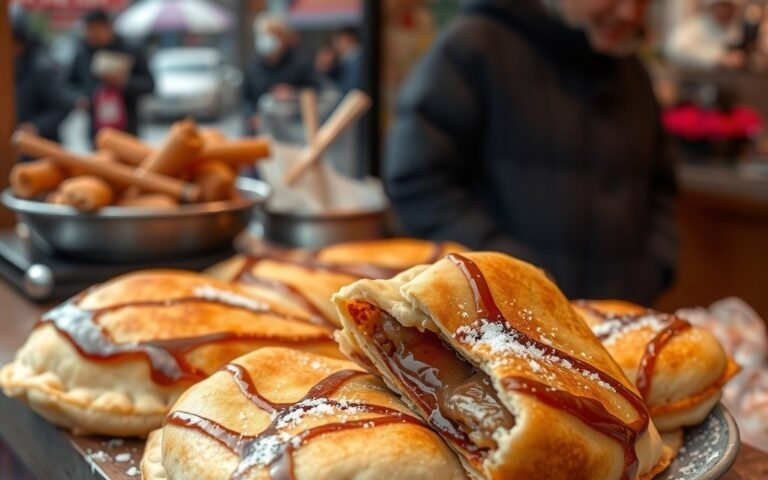
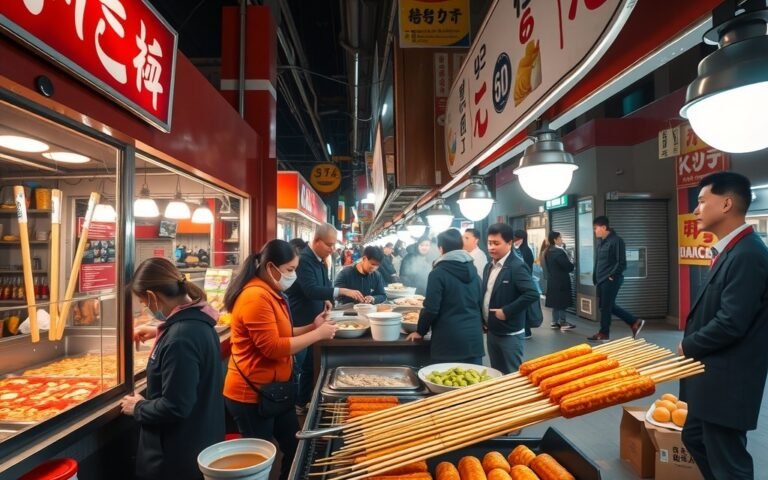
🎨 This image is an AI-generated illustration, not a photograph of a specific stall or dish.
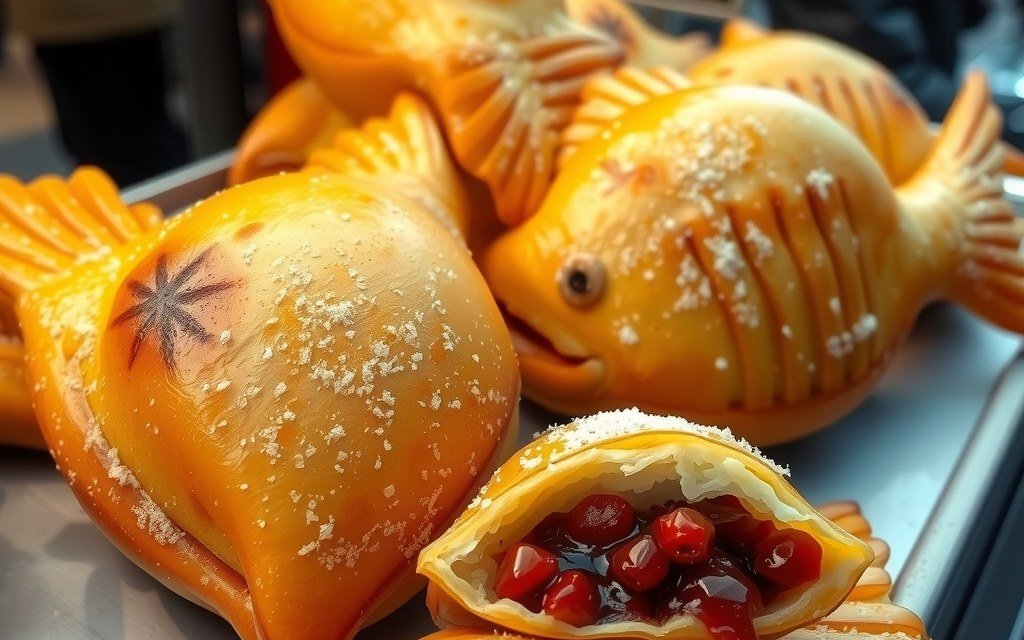
Bungeoppang (붕어빵) is the fish-shaped winter pastry with a sweet red-bean heart — crispy outside, warm inside, and no actual fish. First the facts, then the story.
🍢 The basics
- What it is: a batter pastry pressed in a fish-shaped mould and filled with sweet red-bean paste.
- Main ingredients: wheat-flour batter and red-bean paste (custard, choco or pizza fillings also exist).
- Taste: thin, crisp shell with a warm, lightly sweet filling.
- Where & when: winter street carts; usually a few for about a thousand won.
- ⚠️ Allergens: wheat; some fillings contain milk or egg.
The story: fish-shaped, but no fish
Despite the name and the shape, there is no fish in bungeoppang — just a crisp pastry fish filled with sweet red bean. It is a cold-weather ritual, and there is even a half-joking national debate over whether to eat it head-first or tail-first.
It is a close relative of Japan’s taiyaki, and modern carts now offer custard, chocolate and savoury fillings too.
Where it ranks: No. 8 in our 10 Best Korean Street Foods guide. Hungry for more? Try Hotteok and Gyeran-ppang too.
Frequently Asked Questions
No — it is just shaped like a fish. The filling is sweet red-bean paste (or custard, chocolate and others).
Classic red bean is standard; many carts also offer custard, chocolate and even savoury pizza-style fillings.
It is a fun, long-running debate among Koreans — there is no right answer, just strong opinions.
It is the Korean cousin of Japan’s taiyaki — very similar, with Korea’s own fillings and crisp-thin style.