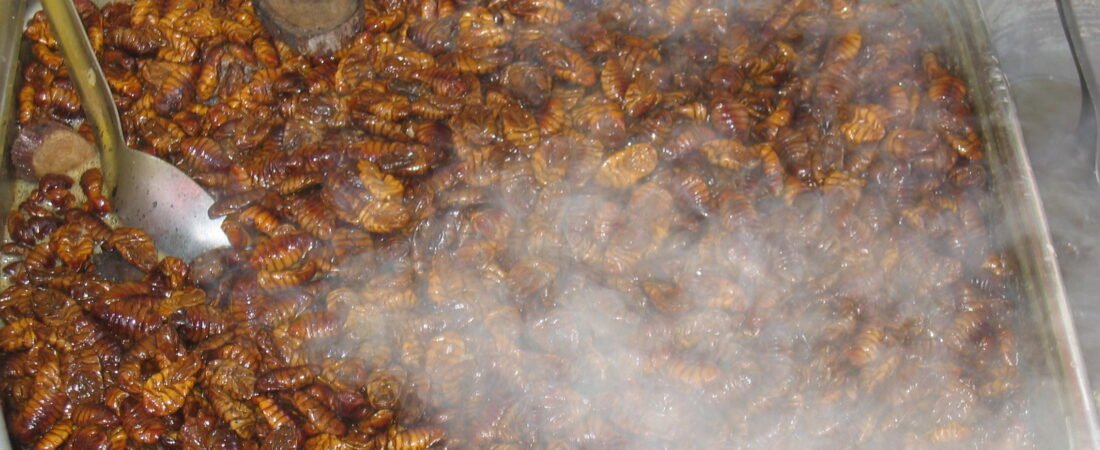
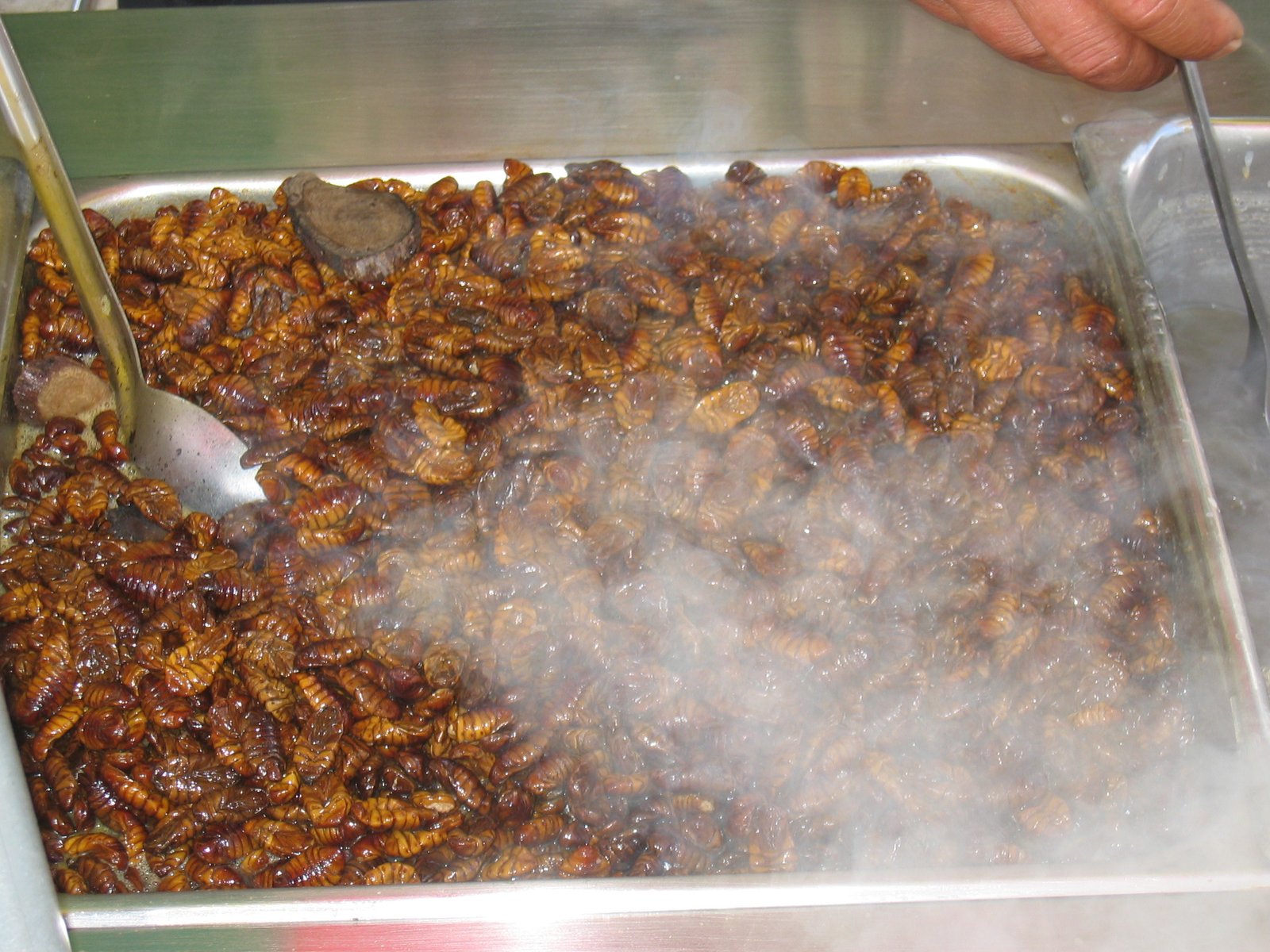
I smelled it before I saw it. A strong, earthy, slightly bitter aroma drifting through Gwangjang Market. I followed it to a steaming pot full of small brown pupae bobbing in dark broth. Beondegi(번데기) — Korean steamed silkworm pupae. The vendor scooped some into a paper cup and handed it to me with a toothpick.
I won’t lie. The first one was a challenge. The texture is unique — a slight pop, then a soft, savory interior. But by the third one, I understood. Korean kids grow up eating beondegi as a protein snack. It’s not for tourists. It’s for Koreans who remember.
What Is It?
Beondegi is silkworm pupae (the cocoons after the silkworm larvae have spun their silk) steamed or boiled with seasoning. Surprisingly high in protein — about 120 kcal per 100g. They’re sold from large pots at markets and amusement parks, eaten with a toothpick from a paper cup.
Did You Know?
Beondegi became popular as a protein snack during Korea’s post-war years when meat was expensive. Silkworm pupae were a byproduct of Korea’s silk industry — and instead of throwing them away, Koreans turned them into a snack. Today, they’re both a nostalgia food for older Koreans and a “challenge” food for younger ones and tourists.
Where & Price
Traditional markets, amusement parks, festival areas. Most famous spots: Gwangjang Market, Namdaemun. Price: 2,000-3,000 KRW ($1.50-$2.25) per cup.
A Test of Courage (Worth Taking)
Beondegi is the food that separates curious travelers from cautious ones. The smell is strong, the appearance is intimidating, the concept is — let’s be honest — a lot. But the texture is interesting, the flavor is genuinely savory, and the cultural significance is real. You don’t have to love it. But trying it once is worth the story alone.


