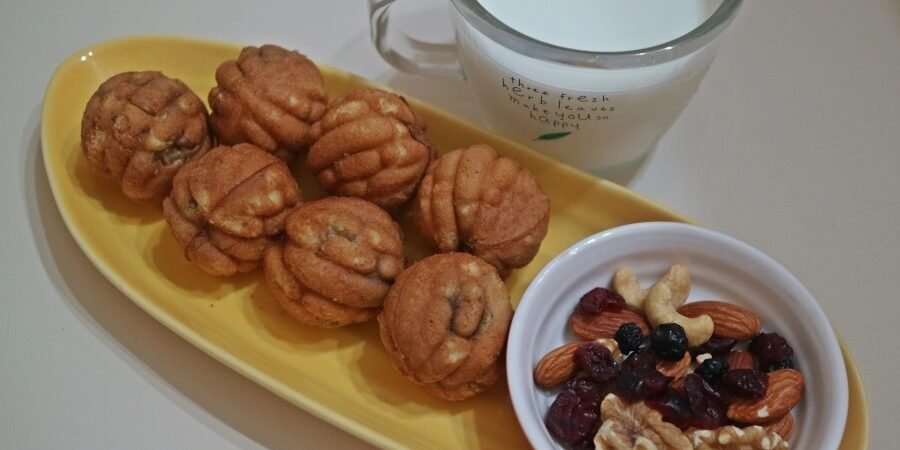
The KTX pulls into Cheonan Station and you smell it before you see it — warm, buttery, faintly nutty. Somewhere on the platform a vendor is pulling fresh hodugwaja (호두과자) from a hot iron mold, and within thirty seconds you’re handing over a few thousand won for a paper bag of golf-ball-sized cakes that burn your fingers in the best possible way.

The first time I tried hodugwaja, I was a tired commuter who’d given up on the idea that train station food could be memorable. One bite changed that. The cake is barely thicker than a pancake, with a single walnut and a thumbprint of red bean paste sealed inside a shell shaped like — yes — a walnut. It’s warm, soft, vaguely buttery, and somehow impossibly comforting.
Did you know?
Hodugwaja was invented in 1934 in Cheonan by a couple named Cho Gwi-geum and Sim Bok-soon. It’s nearly 100 years old, and the original shop — Hakhwa Hodugwaja — still operates today. Cheonan is now nicknamed “the city of walnut cakes” because of it.
Why every Korean grandparent buys a box.
Hodugwaja is the unofficial souvenir of long train rides. If you’ve been to Cheonan and didn’t bring some home, your family will absolutely notice. It’s the Korean equivalent of bringing back a tin of shortbread from Edinburgh — a small ritual of “I was there, and I thought of you.”
Where to find it.
Cheonan Station, Seoul Station, and most highway rest stops. Look for the rotating iron molds and the sweet smell. A box of 20 runs about 5,000–8,000 won. Eat them warm if you can — they’re a different food entirely once they cool.
Next time you’re catching a train in Korea, don’t just buy a coffee. Buy a paper bag of hodugwaja and let the steam fog up the window. It’s the smallest, warmest souvenir Korea makes.


